


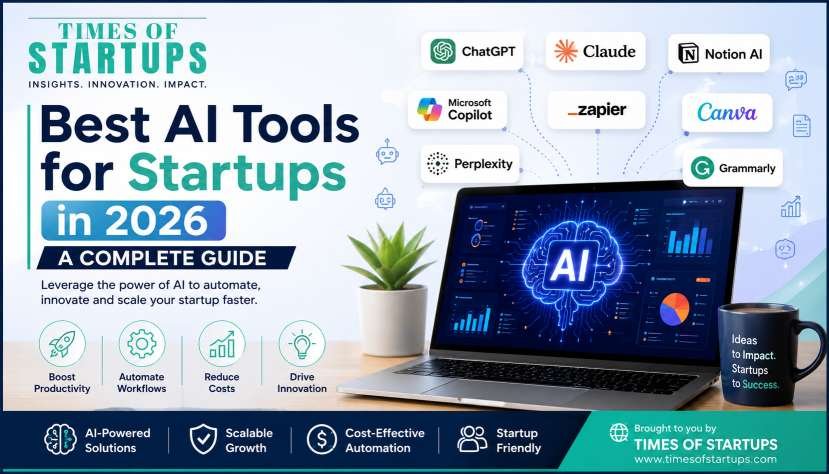
In an increasingly competitive landscape, startups are turning to artificial intelligence (AI) tools to enhance productivity, streamline operations, and foster innovation. The integration of AI software into startup ecosystems isn’t just a trend; it’s become essential for survival and growth. This article explores how leveraging current AI tools can drive efficiency and spur innovation in startups. We will cover various aspects, including AI productivity platforms, machine learning tools, and the transformative impact of AI automation on small businesses. Additionally, we’ll discuss the strategic implementation of these tools and their return on investment in a rapidly evolving market.
What Are the Top AI Productivity Platforms for Startups in 2026?
Artificial intelligence is redefining how startups operate, enabling small teams to accomplish more with fewer resources. In 2026, AI productivity platforms have become essential for automating repetitive tasks, improving collaboration, and accelerating decision-making. From content creation and project management to customer support and data analysis, these tools help startups scale efficiently while reducing operational costs.
Among the leading AI productivity platforms are ChatGPT, Microsoft Copilot, Google Gemini, Notion AI, ClickUp AI, Asana Intelligence, Zapier AI, Slack AI, Grammarly AI, and Perplexity AI. These platforms streamline everyday business activities by generating content, summarizing meetings, automating workflows, managing projects, and providing real-time insights. Many also integrate seamlessly with popular business applications, creating a unified and efficient digital workspace.
For early-stage startups, AI-powered automation eliminates manual processes such as scheduling, email drafting, customer support responses, lead qualification, and document generation. Sales teams can leverage AI to personalize outreach, while marketing teams use it to create SEO-optimized content and analyze campaign performance. Product development teams benefit from AI-assisted coding, bug detection, and technical documentation, allowing faster product releases.
When selecting an AI productivity platform, startups should consider factors such as ease of integration, scalability, security, collaboration features, pricing, and customization options. Cloud-based AI platforms with built-in automation capabilities offer the flexibility required for rapidly growing businesses.
As AI technology continues to evolve, productivity platforms are becoming intelligent digital assistants capable of handling complex workflows with minimal human intervention. Startups that embrace these AI solutions in 2026 can improve efficiency, reduce costs, and focus their resources on innovation and sustainable growth, gaining a significant competitive advantage in an increasingly AI-driven business landscape.
Which Machine Learning Tools Enhance Startup Workflow Automation?
Modern startups operate in an environment where speed often determines success. Founders need to manage marketing, customer support, sales, operations, finance, recruitment, and product development—often with limited resources. Hiring large teams isn’t always practical, making workflow automation one of the most valuable competitive advantages.
Machine Learning (ML) has transformed workflow automation beyond traditional rule-based systems. Instead of simply following predefined instructions, ML-powered tools learn from data, identify patterns, predict outcomes, and continuously improve performance.
Whether you’re an AI startup, SaaS company, fintech business, healthcare platform, eCommerce brand, or B2B software provider, machine learning automation tools can dramatically reduce manual work while increasing efficiency.
What Is Machine Learning Workflow Automation?
Machine Learning workflow automation refers to using AI models that automatically perform repetitive business tasks while improving their performance over time through data analysis.
Unlike traditional automation:
Traditional Automation
- Fixed rules
- Requires manual updates
- Cannot adapt
- Good for repetitive tasks
Machine Learning Automation
- Learns from historical data
- Continuously improves
- Makes predictions
- Detects anomalies
- Personalizes workflows
Example:
Instead of creating 100 email rules manually, an ML system learns which leads are most likely to convert and prioritizes them automatically.
Why Startups Need Machine Learning Automation
Growing startups typically face challenges such as:
- Limited workforce
- Increasing customer inquiries
- Rapid scaling
- Large datasets
- Rising operational costs
- Pressure to improve productivity
Machine learning addresses these problems by automating:
- Customer support
- Lead qualification
- Sales forecasting
- Marketing personalization
- Fraud detection
- Inventory management
- HR recruitment
- Financial analysis
The result is faster growth without proportionally increasing headcount.
Benefits of ML-Powered Workflow Automation
1. Significant Time Savings
Employees spend less time on repetitive administrative work and more time on strategic activities.
2. Reduced Operational Costs
Automation decreases labor-intensive processes and minimizes human error.
3. Better Decision Making
ML analyzes millions of data points to generate actionable insights.
4. Higher Customer Satisfaction
Customers receive faster responses and personalized experiences.
5. Increased Productivity
Teams complete more work with fewer manual interventions.
6. Improved Accuracy
Machine learning models reduce errors in forecasting, classification, and data processing.
Comparison Table: Top Machine Learning Workflow Automation Tools
| Tool | Best For | Coding Required | AI Features | Startup Friendly |
|---|---|---|---|---|
| TensorFlow | Custom AI applications | High | Deep Learning | Medium |
| PyTorch | Research & AI products | High | Neural Networks | Medium |
| DataRobot | Automated ML | Low | AutoML | Excellent |
| H2O.ai | Predictive analytics | Medium | AutoML | Excellent |
| Microsoft Azure ML | Enterprise workflows | Medium | Cloud ML | Excellent |
| Google Vertex AI | AI deployment | Medium | Generative AI | Excellent |
| Amazon SageMaker | ML lifecycle | Medium | Cloud Automation | Excellent |
| RapidMiner | Business analytics | Low | Drag-and-drop ML | Very Good |
| KNIME | Data workflows | Low | Visual automation | Excellent |
| MonkeyLearn | Text analysis | Very Low | NLP | Excellent |
Top Machine Learning Tools for Startup Automation
1. TensorFlow
TensorFlow remains one of the most powerful open-source ML frameworks.
Best Use Cases
- Recommendation engines
- Image recognition
- Predictive analytics
- Customer behavior analysis
- NLP applications
Advantages
- Highly scalable
- Large community
- Production-ready
- Extensive documentation
Limitations
- Steep learning curve
- Requires ML expertise
2. PyTorch
PyTorch is preferred by researchers and AI startups building cutting-edge models.
Best For
- Computer Vision
- NLP
- AI assistants
- Deep learning research
- Custom neural networks
3. DataRobot
DataRobot automates machine learning development without requiring advanced coding.
Features
- AutoML
- Predictive analytics
- Model deployment
- Automated monitoring
- Business dashboards
Ideal for startups lacking dedicated ML engineers.
4. H2O.ai
H2O.ai simplifies predictive modeling for startups.
Applications include:
- Customer churn prediction
- Revenue forecasting
- Fraud detection
- Risk analysis
5. Google Vertex AI
Google Vertex AI integrates model training, deployment, and MLOps into a unified platform.
Benefits include:
- Foundation models
- Managed pipelines
- Feature store
- Model monitoring
- AutoML capabilities
6. Microsoft Azure Machine Learning
Azure ML suits startups already using the Microsoft ecosystem.
Key capabilities:
- Automated machine learning
- Responsible AI tools
- Pipeline automation
- Model registry
- Security and compliance
7. Amazon SageMaker
Amazon SageMaker provides end-to-end ML development and deployment.
Ideal for:
- SaaS startups
- FinTech
- Healthcare
- Retail
- Enterprise software
8. RapidMiner
RapidMiner focuses on business users rather than data scientists.
Highlights:
- Drag-and-drop workflows
- Predictive models
- Data preparation
- Visual dashboards
9. KNIME
KNIME is an open-source analytics platform.
Advantages include:
- Visual workflow builder
- Data integration
- Machine learning
- Reporting
- Automation scheduling
10. MonkeyLearn
MonkeyLearn specializes in Natural Language Processing.
Use Cases:
- Customer feedback analysis
- Support ticket classification
- Sentiment analysis
- Survey insights
- Review categorization
Startup Departments That Benefit Most
Marketing
Machine learning automates:
- Email personalization
- Ad optimization
- Customer segmentation
- Content recommendations
- Campaign analytics
Sales
Sales automation includes:
- Lead scoring
- Opportunity prediction
- CRM updates
- Follow-up recommendations
- Revenue forecasting
Customer Support
ML enables:
- AI chatbots
- Ticket routing
- Response suggestions
- Customer sentiment detection
- Self-service automation
Finance
Finance teams benefit from:
- Invoice processing
- Expense categorization
- Cash-flow prediction
- Fraud detection
- Budget forecasting
Human Resources
Recruitment automation includes:
- Resume screening
- Candidate ranking
- Interview scheduling
- Employee retention prediction
Workflow Automation Examples
Example 1: SaaS Startup
Before Automation:
- Manual lead qualification
- Manual CRM updates
- Generic email campaigns
After ML Automation:
- Automatic lead scoring
- Personalized onboarding
- Customer churn prediction
- Renewal reminders
Example 2: eCommerce Startup
Machine learning can automate:
- Product recommendations
- Dynamic pricing
- Inventory forecasting
- Demand prediction
- Customer segmentation
Example 3: Healthcare Startup
Possible automations include:
- Appointment scheduling
- Patient prioritization
- Medical document classification
- Risk prediction
- Claims processing
Startup Automation Lifecycle
Collect Data
      ↓
Clean Data
      ↓
Train ML Model
      ↓
Deploy Model
      ↓
Automate Workflow
      ↓
Collect Feedback
      ↓
Improve Model
      ↓
Repeat
Choosing the Right Machine Learning Tool
Consider the following factors:
Company Size
Small startups often benefit from low-code or no-code AutoML platforms.
Budget
Open-source frameworks reduce licensing costs but require engineering expertise.
Technical Expertise
Non-technical teams should prioritize visual workflow builders.
Integration Requirements
Ensure compatibility with:
- CRM systems
- ERP software
- Marketing platforms
- Data warehouses
- APIs
Scalability
Choose solutions capable of handling future growth without major migration.
Common Mistakes to Avoid
Automating Poor Processes
Fix inefficient workflows before automating them.
Ignoring Data Quality
Machine learning depends on accurate, relevant data.
Lack of Monitoring
Models require ongoing evaluation and retraining.
Overcomplicating Early Projects
Start with one impactful workflow before expanding.
Ignoring Employee Adoption
Provide training and documentation to encourage effective use.
Emerging Trends in Machine Learning Automation
Several trends are shaping the future of startup automation:
- AI agents capable of completing multi-step business tasks
- Generative AI integrated into everyday workflows
- Retrieval-Augmented Generation (RAG) for enterprise knowledge access
- Explainable AI to improve transparency in decision-making
- Hyperautomation that combines robotic process automation (RPA), machine learning, and process mining
- Edge AI for faster, privacy-focused inference on devices
- Predictive business intelligence for proactive decision-making
Startups that adopt these technologies strategically can build leaner operations while remaining adaptable as they grow.
Best Practices for Successful Implementation
- Identify repetitive, high-impact tasks first.
- Define measurable success metrics (time saved, error reduction, conversion improvements).
- Clean and organize your data before training models.
- Begin with pilot projects and iterate based on results.
- Monitor model performance continuously and retrain when necessary.
- Keep humans involved in high-risk or high-value decisions.
- Ensure security, privacy, and compliance throughout the workflow.
How Do AI Automation Tools Improve Small Business Efficiency?
Artificial intelligence (AI) automation tools have become invaluable for small businesses looking to maximize productivity while keeping operational costs low. By automating repetitive tasks and providing data-driven insights, AI enables business owners and employees to focus on strategic growth rather than routine administrative work. Here are some of the key ways AI automation tools improve small business efficiency.
1. Automate Repetitive Tasks
AI tools can handle routine activities such as data entry, invoice generation, appointment scheduling, and email management. This reduces manual effort, minimizes errors, and saves valuable time.
2. Enhance Customer Support
AI-powered chatbots and virtual assistants provide instant responses to customer inquiries, resolve common issues, and offer 24/7 support. This improves customer satisfaction while reducing the workload on support teams.
3. Increase Marketing Productivity
AI helps businesses create content, optimize SEO, schedule social media posts, personalize email campaigns, and analyze marketing performance. These capabilities enable small businesses to reach their target audience more effectively.
4. Improve Sales Efficiency
AI can automatically score leads, track customer interactions, generate personalized follow-up emails, and forecast sales trends. This allows sales teams to prioritize high-potential prospects and close deals faster.
5. Simplify Financial Management
AI-powered accounting software automates bookkeeping, expense tracking, invoice processing, and financial reporting. It also helps identify spending patterns and supports better budgeting decisions.
6. Support Better Decision-Making
By analyzing business data in real time, AI provides actionable insights, identifies trends, and predicts future outcomes. Business owners can make informed decisions based on accurate data rather than assumptions.
7. Improve Team Collaboration
AI-integrated project management platforms automate task assignments, meeting summaries, deadline reminders, and workflow tracking, ensuring teams remain organized and productive.
Which AI Use Cases Are Most Impactful for Startup Growth and Innovation?
Understanding practical AI use cases is vital for startup growth. Below are several impactful applications of AI:
- Predictive Analytics: Businesses utilize AI to analyze trends and make data-driven predictions that inform strategic decisions.
- Customer Insights: AI can analyze customer behavior patterns, allowing startups to tailor services and products to meet evolving market demands.
- Fraud Detection: In financial sectors, AI applications help identify and prevent fraudulent activities through real-time data analysis.
Exploring these use cases enables startups to identify opportunities for innovation and growth.
How Can AI Customer Engagement Platforms Increase Startup Revenue?
AI-driven customer engagement platforms significantly impact revenue generation for startups. They achieve this by:
- Personalization: Utilizing AI algorithms, startups can create personalized experiences that enhance customer loyalty.
- Customer Support Automation: AI chatbots can provide 24/7 customer support, significantly reducing operational costs while increasing customer satisfaction.
- Data-Driven Insights: These platforms analyze customer interactions to provide actionable insights that inform marketing strategies and product development.
By leveraging these platforms, startups can engage effectively with their audiences and increase profitability.
What Role Does AI Play in Startup Financing and Decision-Making?
AI is revolutionizing how startups approach financing and decision-making processes. Key roles include:
- Data Analysis: AI tools can analyze extensive amounts of financial data to provide insights that guide funding decisions.
- Risk Assessment: AI models can evaluate potential investment risks by analyzing market conditions and predicting future trends.
- Capital Allocation: Through data-driven insights, startups can make informed decisions about where to allocate resources effectively.
Utilizing AI in finance can transform the decision-making process, enabling startups to navigate challenges with confidence.
How to Implement AI Solutions Successfully in Startups: Strategies and Challenges
Implementing AI solutions successfully involves several strategic steps and facing common challenges. Startups should consider:
- Identifying Needs: Assessing specific business needs that AI can address is critical for successful implementation.
- Choosing the Right Tools: Selecting AI tools that align with business objectives and team capabilities ensures a smoother integration process.
- Training Staff: Proper training for team members on how to utilize AI tools maximizes their effectiveness and encourages acceptance.
Despite these steps, challenges such as data privacy concerns and integration with existing systems can complicate AI adoption.
Which Challenges Do Startups Face When Scaling AI Technologies?
Scale-up challenges are frequent in AI implementations. Some include:
- Resource Limitations: Startups may lack the financial and human resources necessary for effective scaling.
- Data Management: Handling large volumes of data can overwhelm systems not designed for such loads.
- Skills Gap: A shortage of qualified personnel to manage and leverage AI systems can hinder progress.
Understanding these challenges is crucial for startups seeking to leverage AI technologies for growth.
What Are Recent Startup Success Stories Leveraging AI for Efficiency Gains?
Artificial intelligence (AI) is no longer limited to large enterprises. In recent years, startups across industries have successfully leveraged AI to automate workflows, enhance customer experiences, and scale their businesses with lean teams. From healthcare and fintech to software development and logistics, AI is helping startups achieve remarkable efficiency gains. Here are some notable examples.
1. Harvey – Revolutionizing Legal Workflows
Harvey, an AI legal technology startup, uses generative AI to assist lawyers with legal research, document drafting, contract analysis, and case preparation. By automating time-consuming legal tasks, Harvey enables law firms to improve productivity and focus on high-value legal work.
2. Synthesia – AI-Powered Video Creation
Synthesia allows businesses to create professional videos using AI-generated avatars instead of traditional filming. Companies can produce training videos, marketing content, and product demonstrations in minutes, significantly reducing production costs and turnaround time.
3. ElevenLabs – Transforming Voice Generation
ElevenLabs has developed advanced AI voice synthesis technology that produces realistic multilingual voiceovers. Businesses use the platform to automate audiobook narration, customer support, video localization, and podcast production, saving both time and resources.
4. Perplexity AI – Accelerating Research
Perplexity AI offers an AI-powered search and research assistant that provides accurate, source-backed answers. Startups and professionals use it to gather market intelligence, summarize information, and conduct research much faster than traditional search methods.
5. Abridge – Improving Healthcare Documentation
Healthcare startup Abridge uses AI to convert doctor-patient conversations into structured clinical notes. This reduces administrative work for healthcare professionals, allowing them to spend more time with patients while improving documentation accuracy.
6. Zipline – AI-Driven Logistics
Drone delivery company Zipline leverages AI for route optimization, inventory planning, and autonomous deliveries. Its technology improves delivery efficiency for medical supplies and essential products, particularly in remote regions.
7. Runway – AI for Creative Professionals
Runway provides AI-powered tools for video editing, image generation, and visual effects. Content creators and marketing teams can automate complex editing tasks, reducing production time while maintaining high-quality output.
How Have AI Automation Platforms Delivered ROI in 2024–2026?
The return on investment (ROI) from AI automation platforms has been notable from 2024 to 2026. Key observations include:
- Cost Savings: Many startups reported substantial savings from automating routine tasks, allowing reallocation of resources.
- Increased Productivity: Startups often cited a marked increase in overall productivity due to minimized manual errors and faster processing times.
- Enhanced Decision-Making: Data analytics provided by AI platforms enable better-informed decision-making, leading to optimized operational strategies.
Understanding ROI implications helps startups benchmark their AI investments effectively.
What Future Trends and Ethical Considerations Shape AI Innovation in Startups?
As AI technology evolves, several future trends and ethical considerations are becoming increasingly prominent:
- Ethical AI Development: There is growing emphasis on developing AI systems that prioritize fairness and prevent bias in decision-making processes.
- Regulatory Compliance: Startups must remain vigilant regarding emerging regulations surrounding AI use to avoid potential legal challenges.
- Sustainability: Incorporating sustainable practices in AI development can improve brand image while contributing to broader societal goals.
Preparing for these trends helps startups maintain relevance and leadership in their fields.
How Will Generative AI and Real-Time Analytics Transform Startup Efficiency?
Generative AI and real-time analytics are poised to significantly transform startup efficiency. By leveraging these technologies, startups can:
- Automate Content Creation: Generative AI can create high-quality content rapidly, saving time in marketing and communications.
- Enhance Decision-Making Speed: Real-time analytics allow startups to make swift decisions based on the latest available data, adapting strategies quickly in response to market changes.
- Improve Customer Experiences: Personalized solutions can be developed and implemented faster, enhancing customer satisfaction.
The integration of these advanced technologies will likely redefine operational capabilities for startups going forward.
Why Is Ethical AI Use Critical for Sustainable Startup Growth?
Ethical considerations are crucial for the sustainable growth of startups leveraging AI. Key points include:
- Trust Building: Ethical AI practices foster trust within customer bases, which is vital for long-term success.
- Reputation Management: Startups that prioritize ethical considerations tend to have better reputations, attracting more customers and investors.
- Regulatory Compliance: Adhering to ethical standards helps startups navigate regulatory landscapes more effectively, reducing legal risks.
A commitment to ethical AI practices not only protects startups legally but also enhances brand loyalty and market position.