


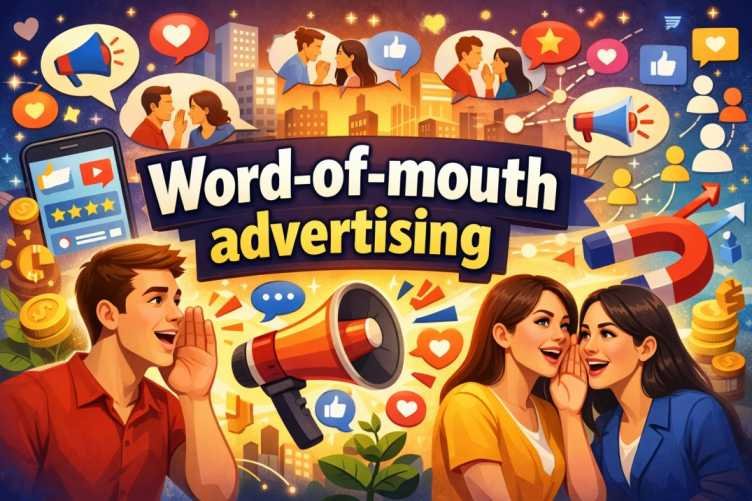
Word-of-mouth advertising might seem old-fashioned compared to the flashy and modern effects of paid ads, but there are quite a few unique advantages that advertising your products and services from person to person has over buying physical or digital ads. Keep reading to learn about why your business should focus on word-of-mouth over paid ads and what contemporary word-of-mouth advertising looks like.
The Benefits of Word-of-Mouth Advertising
The greatest benefit of word-of-mouth advertising is that it is so much cheaper than using traditional paid ads. This factor is important to any business, but this is especially true for startups and other smaller companies that are working with a minimal or limited marketing budget at first. The return of investment has to be significant to make paid advertising worth it, and the risk is often not worth the reward.
Advertising a business person-to-person will also help guarantee that the potential customer’s attention is being held. People’s attention spans are not what they used to be, and both physical and digital ads can be easily swiped away or ignored in a way that is less common with word-of-mouth. Your future customers are also probably more likely to listen to the opinion of their friend or colleague than trusting the message on an ad they see somewhere.
Customer Loyalty
Word-of-mouth advertising both relies on and builds customer loyalty. A current client or customer has to trust and be satisfied with your product or service to recommend it, and their friends, family members, or colleagues are going to be more trusting of a brand that an in-real-life acquaintance has advertised to them.
This kind of marketing is also beneficial because the act of recommending businesses means that this customer will probably continue to purchase products and/or services from them. In this way, word-of-mouth marketing builds a network of loyal customers that will help encourage one another to keep buying in a way that paid advertising simply could not.
Personalizing Your Marketing
Word-of-mouth advertising also helps personalize your marketing in a way that is powerful and unique to your brand. Coworkers, friends, and family members know these potential customers much better than an ad campaign team would and would only recommend products via word-of-mouth that they are sure would be of interest to said person.
Friends, family, and coworkers are also more likely to know why a potential customer would individually connect to a product or service better than a paid advertiser would. For example, a person who hears their friend complaining about hosting an event under unpredictable weather conditions could recommend a tent rental company they had used that had both air conditioning options and heating add-ons.
In this modern technological era where so much of a business’ model can be turned over to AI chatbots or automated software, personalized marketing like word-of-mouth goes the extra mile to make sure that your audience is engaged.
The Problems With Paid Advertising
The biggest problem with paid ads is that they are just so expensive, and many businesses do not want to take that heavy of a financial risk without the promise of getting enough purchases to make up for that investment.
Another major issue with paid advertising is that it can be rather easy to ignore. Physical ads only work if potential customers look at them long enough for the message to land, and digital ads can usually be easily muted and/or swiped away. An old customer interacting directly with a potential new one will have a much bigger effect than ignored ads.
Paid advertising is also just not as reliable as many businesses might think. Paying another company to market for you is definitely the easier option if you have the budget, but word-of-mouth advertising is much more effective if you can get customers to market your product for you.
Word-of-Mouth Advertising in the Modern Era
In the modern era, word-of-mouth advertising also looks so much different than it once did thanks to new technologies. The main difference here is that word-of-mouth no longer means one customer speaking out loud directly to a new potential customer. This type of marketing can instead take the form of leaving a Google review or a customer texting their friends links to a product they like so that they can recommend a certain product or business.
Sharing favorite products or services via social media platforms is becoming so popular across most parts of the world. Every one of the billions of people that use these apps or websites every day are potential customers that can be reached through word-of-mouth recommendation or a combination of paid ads and word-of-mouth.
For example, a tent rental company could get a big boost in their business by a happy customer posting an Instagram story about how happy they were with the large tents that they rented for their corporate event. That kind of advertising would be trusted by any of that person’s friends and not have the feel of paid ads that people automatically want to skip.
Conclusion
Even though it is more difficult and arguably more old-fashioned, word-of-mouth advertising is the best form of marketing. It tends to be much cheaper than paid ads, comes with guaranteed brand trust, and personalizes your product. Instead of relying on paid advertising and hoping that you will get a massive return on your investment, you should do whatever you can to encourage word-of-mouth advertising amongst your customer base.